
Trading Places!
(From the teachings of Maran Rabbeinu Ovadia Yosef ztvk”l)(written by his grandson HaRav Yaakov Sasson Shlit”a)(translated by our dear friend Rav Daniel Levy Shlit”a, Leeds, United Kingdom)
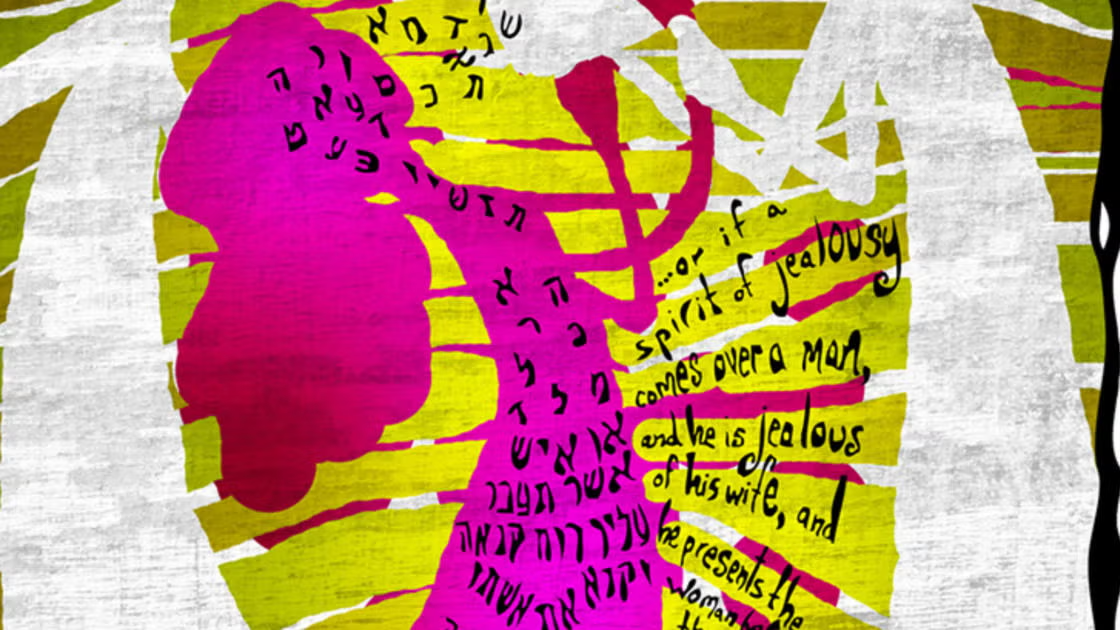
The Parashah states, “The sacred offerings of each individual remain his own property. When they are given to the cohen, they become the [cohen’s] property” (Bamidbar 5:10).
What does the Pasuk mean? Tosafot (Ta’anit 9a) quote the Chachamim from the Sifrei who explain the pasuk, “Take a tithe (indeed you shall tithe) of all the seed crops” (Devarim 14:22), to mean tithe in order to generate further wealth [see Bamidbar Rabbah 12:11]; one who tithes will eventually become wealthy. This does not only refer to produce but even to money, “all the produce of your seed” – even other forms of commerce which are not produce. Whatever a person makes a profit from, it is a mitzvah to tithe from it to the poor and to Torah institutions, such as yeshivot and similar institutes.
The Chachamim explain in the Gemara that it once happened to a G-D-fearing man that every year his field produced 100 tonnes of grain. A blessing rested on this field, and this person would thank his Creator.
Until the period of the Amoraim, they had the ash of the red heifer through which they could purify themselves from the impurity of death, and as such, the people became pure from the impurity of death. Our Rebbe, the Arizal, explains that in those days the Chachamim were able to utilise Holy Names of Hashem, for example, at times of danger. But today it is forbidden to use the Holy Names, for we are impure from contact with the dead. As they say in Avot (4:5), “And one who makes personal use of the crown of Torah shall perish.”
Since they were pure, what did they do with the produce? They gave terumah to the cohen, meaning that 2% was given to the cohen as terumah gedolah (today the halachah is somewhat different regarding these amounts). Apart from this there is ma’aser rishon (a tenth) to the Levi and also ma’aser sheni (a further tenth is separated and eaten in Yerushalayim). In the third and sixth years of the cycle of Shemitah they gave ma’aser ani (which is given to the poor) instead of ma’aser sheni.
This man, who owned the field, was G-D-fearing and gave in earnest terumah gedolah, ma’aser rishon and ma’aser sheni, amounting to more than 20%! He would give this each year as the Torah requires.
This man had one son. Close to his death, he called his son and said to him, “I am leaving you a fertile field, a blessed field. Every year it produces 100 tonnes of produce. Be careful to separate from it terumot and ma’asrot and Hashem will bless you.” With this message he died.
The following year the field produced 100 tonnes. His son saw this and fulfilled his father’s wishes. He separated from the produce terumot and ma’asrot according to the halachah. He saw some 20 tonnes going to terumot and ma’asrot. He said to his household, “Next year I am not doing this! I will, of course, separate terumah to the cohen, 2%, but ma’aser rishon and ma’aser ani I will not separate!”
However, Heaven heard what he said. And as it states, “He Who implants the ear, will He not hear? Will He Who fashions the eye not see?” (Tehillim 94:9). The following year the field produced only 10 tonnes of produce! The son saw this and was very distressed. How could his field be cursed and produce only one tenth of what it had produced in previous years?
His family saw what had happened to him. What did they do? They donned white garments, festival clothing, and came before him. They said, “Mazal tov! Mazal tov!”
He asked them, “Are you mocking me? What mazal tov?”
They replied, “Your father ensured that every year he gave the cohen, the Levi and the poor man their portions, but now you have made yourself a cohen! You receive the ma’aser! And Ha’Kadosh Baruch Hu has kept the rest of the field for Himself! In that case, you have been elevated, so mazal tov!”
This is what the Pasuk means: “The sacred offerings of each individual remain his own property. When they are given to the cohen, they become the [cohen’s] property.” If he gives the terumot and ma’asrot according to the halachah, the rest of the field will remain for him.
But if he does not give them, then “that which he gives the cohen shall be for him”; only that which he gives the cohen will remain for himself. Such is the punishment of a tight-fisted person!
A person who gives tzedakah generously will find that all his business dealings are blessed. Blessing will rest on all his work. The Gemara (Temurah 16a) quotes the pasuk, “The rich man and the poor man meet; Hashem is the Maker of them all” (Mishlei 22:2).
The Gemara explains that the rich man and the poor man met. The poor man extended his hand and said, “Give me tzedakah!” If he gives him something, all is good. However, if he does not give him anything and instead replies, “May Hashem have pity, may Hashem have pity,” then Ha’Kadosh Baruch Hu says to him, “I made him poor and I made you rich, and you are not giving to him? The One Who made this man poor will make him rich, and the One Who made you rich will impoverish you!”
Rabbenu David HaNagid (1222–1300), the Rambam’s grandson, writes in his work Midrash David, “I saw with my own eyes how this statement of Chazal was fulfilled.”
It once happened to a merchant who was married to an eshet chayil who was very wise and an amazing cook. Each day the merchant returned home and his wife would serve him cooked chicken, and each day it had a totally different flavour – one time with turmeric, one time with pepper – and he would sit and eat, licking his fingers because it was so tasty!
One day he came to eat. He washed his hands and sat at the table, and he heard knocking at the door. He said to his wife, “Go and please see who is knocking on the door.”
His wife approached the door and found an impoverished man standing there, pleading, “I have not eaten anything for two days. Please give me something to eat.”
The ba’al habayit angrily shouted to remove the poor man, “Go! Do not disturb us! Go from here!”
The poor man began to plead for his life, “Please, do me a favour. I have not eaten for many days.”
The ba’al habayit got up in anger and slapped the poor man twice across the face. “Go! Go from here!”
The poor man left, his eyes streaming with tears.
But Ha’Kadosh Baruch Hu teaches us through the Chachamim in Avot (2:1), “Know what is above you, a watchful eye, a listening ear and all your actions are written in records.”
From that day on the merchant’s “luck” changed. He had a bustling store; as one customer left, another arrived, and he earned a lot of money. But from that day onwards no one entered the store! All day he sat brushing flies away. He had a broom which he used whilst sitting and shooing away the flies.
The next day the situation deteriorated even more. He left a bundle of merchandise on the step near his store when suddenly a policeman issued him with a warning: “This is a public thoroughfare! Why are you placing your merchandise here?” He fined the owner 1,000 shekalim.
And so his “luck” worsened, becoming as black as charcoal. He could no longer afford his rent, so he left the store and, in order to eke out a living, sold the furnishings of his home until he had nothing left.
He said to his wife, “See, my wife, I know that the situation is not good. I have nothing to eat and I certainly have nothing to give you to eat. Why should you suffer? Let us go to the Bet Din and I will divorce you with a get, and you may return to your father’s home.”
The woman agreed. They went to the Bet Din and he gave her a get and divorced her.
The woman returned to her father’s home. He was a well-respected man and welcomed her with open arms. Since he knew that she had golden hands, he entrusted her with all the cooking, and she would cook for her father. Wow! What amazing food she made! Every day she prepared something wonderful, and he thoroughly enjoyed it.
After about a year, a shadchan suddenly appeared and said to the lady’s father, “My master, there is a G-D-fearing trader, a good man, and your household has a good name. Please, if possible, let the two meet.”
Her father responded, “Invite the trader to my home and we shall meet him.”
That night they invited the trader to the father’s home. They sat together and then the father said to his daughter, “My daughter, please serve us some coffee.”
She served the coffee. He saw her and she saw him, and they liked each other.
The next day, her father asked her, “Does this man appeal to you?”
The lady replied, “Yes, father. If you agree, then I am agreeable!”
The father sent word to the shadchan that, from his perspective, all was well, and that night they held a vort (commitment to marry) and the couple became engaged. After three months they celebrated a wonderful wedding. What a joy it was!
Immediately after the wedding, the lady resumed her good custom of cooking. As she had done for her former husband, so she did for the second. Every day she would serve a large Iraqi pitta bread with cooked chicken. Each day the husband marvelled at how tasty it was. It was worthy of great praise!
One day he sat down to eat and someone knocked on the door. He asked his wife to see who it was.
The lady opened the door and found a poor man pleading, “Have mercy on me, for two days I have not eaten anything!”
The woman said to her husband, “Come and see, there is a poor man at the door.”
The man got up and took a large pitta, wrapped it around some chicken and said to his wife, “Give him this!”
She gave it to him and his eyes lit up. He began to bless them for their kindness.
The lady returned to the table and her husband saw that she was crying.
“What happened?” he asked her. “Why are you crying?”
She replied, “I will tell you the truth. I recognised him. He is my former husband, and I felt sorry to see how he has deteriorated to such a situation.”
Her husband got up and said to her, “I swear to you, the poor man whom your former husband slapped was me! After he slapped me I went away and cried. I prayed to Hashem that He should give me the knowledge of how I might emerge from my situation.
“The next day I thought to myself, why should I continue collecting handouts? I had a few coins and bought a trading chest. I filled it with all types of things, sunglasses, fountain pens and similar items. I stood in the market and shouted, ‘Everything for a dollar!’ Within a few minutes I had sold everything! I went and bought more stock and repeated the process until that day I had turned over my capital seven times. I made a good profit.
“After a few days of doing this, I thought that a policeman might come and see that I was selling without permission and fine me, which would not be good. So I took all the money that I had made, rented a small shop and obtained a trader’s licence. And so I went from strength to strength until I became a successful trader.”
And so we have seen: the One Who made this one rich made this one poor, and the One Who made this one poor made this one rich. He also merited this wife, who was an eshet chayil and very precious.
Therefore, “Praiseworthy is he who contemplates the needy” (Tehillim 41:2). One who gives tzedakah merits to see the fruit of his deeds in this world, and even if a decree has been issued against him, “on the day of evil, Hashem will deliver him” (ibid.).
We see that one who gives tzedakah is given further life in order to give more tzedakah. As our Chachamim say, “One who pursues righteousness and kindness will find life, righteousness and honour” (Mishlei 21:21). He will find fitting people to whom he may give tzedakah [see Gemara Bava Batra 9b], and he will also generate much wealth so that he is able to give even more tzedakah.
“All the day he is gracious and lends, and his children are a blessing” (Tehillim 37:26).
Shabbat Shalom!
###
About Us - Halacha Yomit
The “Halacha Yomit” website was established in the year 2005 (5765). The goal of the Halacha Yomit team is to spread Torah knowledge, specializing in a broad range of Halacha topics. Extensive emphasis is placed on the clarification of halachic sources and explanations of how to rule on Torah law. This is done in order to publicize that our Torah is a guide for life and there is no such thing as a halachic issue, which does not have a solution that is written in the works of the earlier or later Poskim, whose words serve as our nation’s guiding light. Thank G-d, we have merited that, as of yet, thousands of people have joined Halacha Yomit to learn on a daily basis, in addition to those who visit the site from time to time to take advantage of its vast halachic treasury. For more information visit Halacha Yomit.
Comments
Comments are currently closed.